
Horses

I live above what used to be a Victorian coach house. It is now my cellar, where I am trying to create an underground garden. When historians visit, as they do from time to time, they tell me it is unusual, even architecturally important. I tended to see it as a folly; now I understand it as a place built for horses.
The visitor who changed my view came down from Northumbria. She was meant to stay 30 minutes but spent most of the afternoon here, looking over old plans and taking photographs. After a while, it felt as though she might not leave at all. I thought about offering her a G&T and blowing up an air mattress.
I showed her dozens of rusted hooks built into my cellar walls, most likely the remains of horse tack, the damage to door frames caused by carriage wheels, and we talked about eighteenth-century coaching and what made the Swan Hotel different.
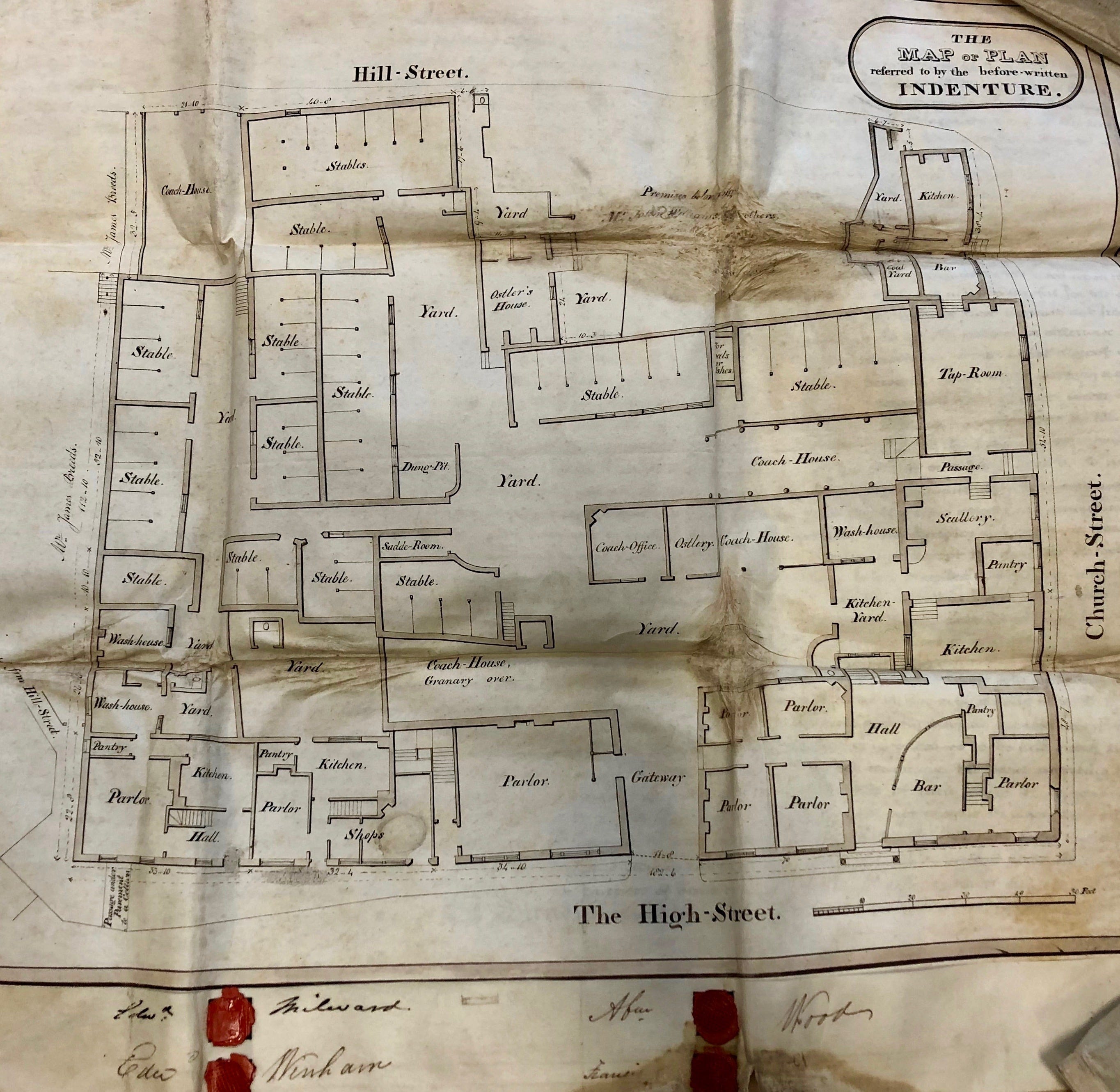
Most coaching inns followed a clear pattern, she said: the best rooms at the front, stables and workshops arranged around a cobbled square behind. At the Swan, the stables were a jumble, fitted wherever space and the slope of the land allowed, sometimes tucked into narrow passages.
By the time of the Napoleonic Wars, when the cavalry took over much of the site, a skittle yard and pleasure garden had vanished from the plans, replaced by more stalls and a dung pit. Coach travel was growing, and every inch of space was devoted to keeping horses moving. It made more sense to think of the Swan not as a hotel with stables but as a service station for horses, with rooms for people above.
The Swan was large, but not unusual. Most inns kept 30 or 40 horses. The Swan with Two Necks in London kept two hundred. By the end of the eighteenth century, the Swan in Hastings could accommodate around 140.
I try to picture some of those horses standing in my cellar, where shelves and boxes are now, animals bred to pull heavy coaches for 15 miles before being changed. They would have arrived tired, soaked in sweat. Thanks to AI, I can picture them clearly, but oddly, the sounds are harder to imagine: the ostler’s bell ringing to signal the arrival of a coach and the clatter of hooves on cobbles
Coaches came and went all day to London, Brighton, Hythe, Dover, and Margate. From Hastings, departures began as early as 4 a.m. during summer. At its busiest, 30 coaches might leave each day, and the same number return. Horses were washed down, fed a mash of grain, led to the stables, and rested while others were hitched up. Water had to be carried from the well, grain from the barns along Hill Street. For the stable boys, work was gruelling, repetitive, and dangerous. I read of a boy crushed when an exhausted horse collapsed on the steep track to the Swan barns, and of horses bolting in the streets, overturning carriages.
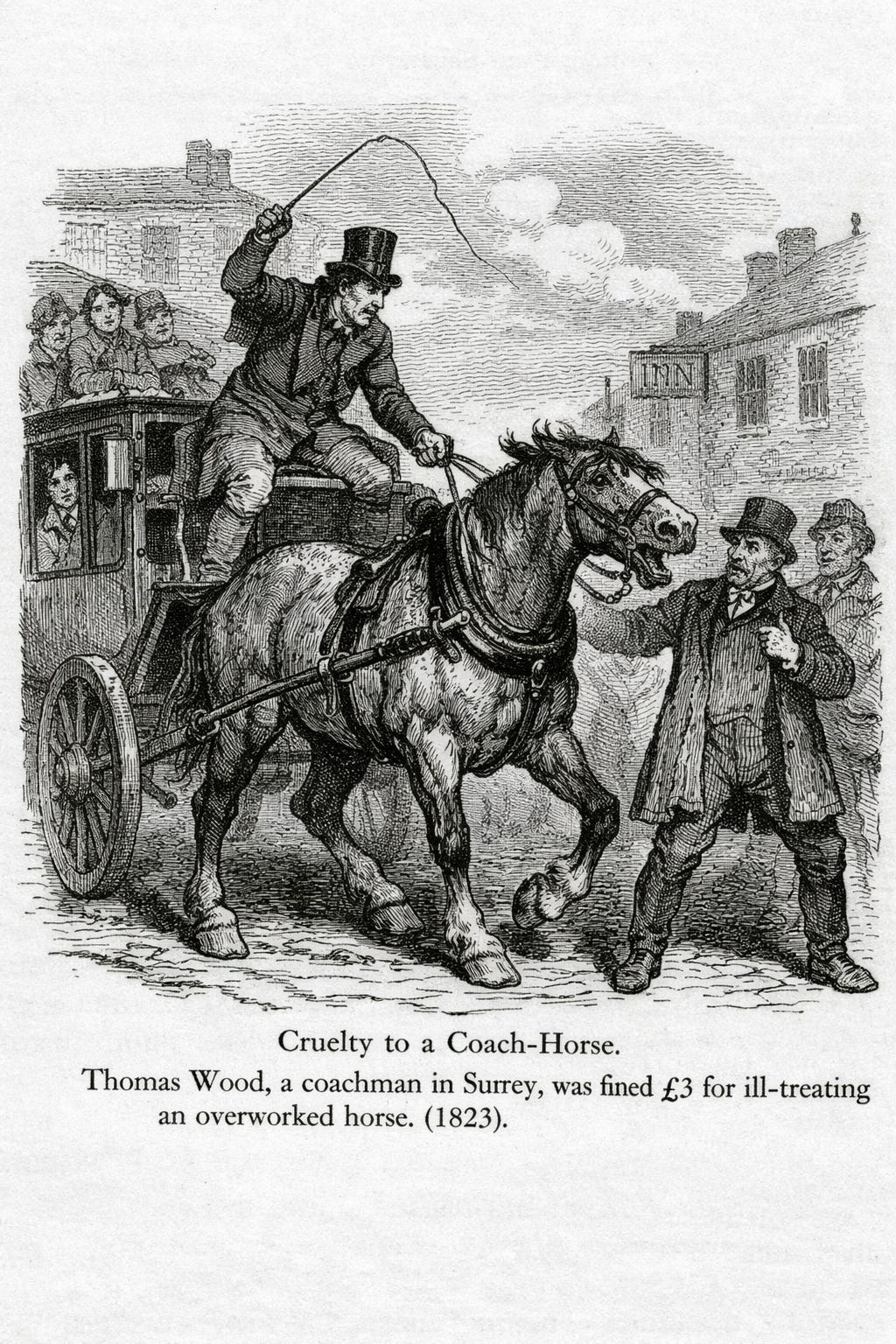
It is easy to assume that the life of a nineteenth-century coach horse was simply brutal. It was hard, but these horses were often better treated than future generations because they were valuable. A good coach horse cost as much as several years of a labourer’s wages. Stable boys were two a penny. These were animals bred for strength and stamina, carefully selected for their ability to pull heavy coaches at a steady trot, and worked within a tightly organised relay system. No horse ran from London to Hastings. Each did a short, intense stretch of ten or fifteen miles before being unharnessed, fed, watered, groomed, and rested.
The work was punishing, but the horses were bred for it. A coach horse might pull more than a ton of coach, luggage, and passengers over steep clay hills and deeply rutted roads, at eight or 10 miles an hour. Downhill was worse than up, the weight pressing against shoulders and legs despite the brake. Horses sweated heavily, went lame, strained joints, and sometimes collapsed. Accidents were common where wheels broke and coaches overturned. Yet coaching inns existed to keep horses moving without destroying them and to send them back onto the road.
In this sense, the coaching era may have been the high point of their treatment. In the early nineteenth century, Parliament finally began to notice what had long been taken for granted, passing laws that made the beating and abuse of working horses a crime.
As coaching declined with the arrival of the railways, the tightly regulated relay system that had protected the horses fell apart. Urban cart and freight horses worked longer hours, at slower speeds, often without enforced rest, and many were worked to death.1
People sometimes ask if there are ghosts in my cellar. If there are, I think they would be equine rather than people.
Patti Smith - Horses (Live,1976)
We created this Substack to bring together everything we can find about the Swan Hotel - its plans, photographs, and paintings - and to tell the stories of the people who lived, worked, and stayed there. Despite the Swan’s long history, and Hastings’ popularity with artists and photographers, only three paintings of the building are currently known to exist, so we are searching archives in the hope of finding more.
We also use this Substack to share what we are discovering during the renovation of the former coach house, now part of our cellar. Visitors can contact us through the Substack page to arrange a visit.
All of this material is free to read. We try to keep it engaging and varied. If you choose to subscribe - for less than the cost of a cup of coffee each month - your support helps us continue searching archives for lost paintings and pay for high-resolution copies of original documents. At some point, a future owner of the house may tank the cellar, so we hope to create a high-resolution 3D scan and make it available online. Our ultimate aim is to build a dedicated website that brings together and indexes all this new material, including access to the virtual model.